

Long before modern development, the Bonsall Valley was valued for its fertile soil, reliable water sources, and gentle coastal climate. Native peoples cultivated the land for generations, recognizing what remains true today: this was a rare place where agriculture, nature, and livability could coexist. Bonsall’s history is defined by landowners and visionaries who understood the long-term value of real assets—fertile land, water security, climate, and scale. Rather than short-term development cycles, Bonsall evolved through careful stewardship by individuals whose success in finance, business, and enterprise shaped how the land was held, improved, and preserved.
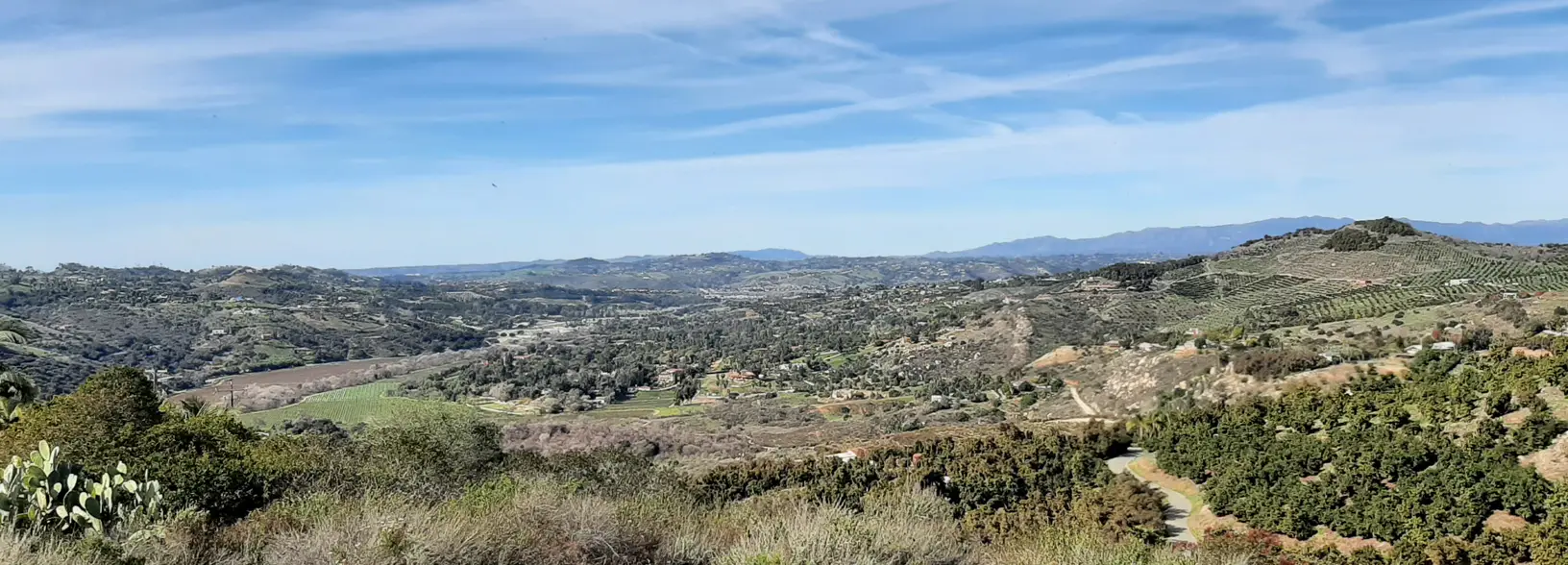 Bonsall became known for estate properties, equestrian ranches, and expansive landholdings. The valley was valued for its natural advantages. These qualities made Bonsall a place where agriculture and settlement could thrive in harmony with the landscape—an enduring truth that continues to define the area today. Here are some noteworthy visionaries who recognized the opportunities Bonsall offers.
C. Arnholt Smith, once dubbed “Mr. San Diego” by the local press, was a titan of mid-20th-century finance whose rise and spectacular fall are inextricably linked to the rural charm of Bonsall. His vision for the San Luis Rey River Valley transformed it from a quiet agricultural pocket into a premier destination for Thoroughbred racing and luxury leisure.
The Vision: San Luis Rey Downs
In the 1960s, Smith began acquiring vast tracts of land in Bonsall. His goal was to create a world-class training center that could serve as a “feeder” for the Southern California racing circuit (Del Mar, Santa Anita, and Hollywood Park).
The Training Facility
The San Luis Rey Downs Training Center became the crown jewel of this endeavor. Unlike many facilities of the time, it was designed with the horse’s well-being in mind, featuring:
- A meticulously maintained one-mile track.
- State-of-the-art barns and veterinary facilities.
- A climate and geography that mirrored the ideal conditions for elite equine athletes.
Under Smith’s influence, the facility hosted legendary champions. Most notably, Fusaichi Pegasus, the 2000 Kentucky Derby winner, trained there, cementing the facility’s reputation as a “nursery of champions.”
The San Luis Rey Downs Golf Course
To complement the equine operations, Smith developed a luxury resort atmosphere centered around a championship golf course. For decades, the course served as the social hub of Bonsall. It was known for its challenging layout that wound through the valley’s rolling hills and old-growth trees. It wasn’t just a sports venue; it was a symbol of the high-society lifestyle Smith curated for his associates and the burgeoning San Diego elite.
The C. Arnholt Smith Empire
At his peak, Smith controlled a massive web of interests through Westgate-California Corporation and United States National Bank (USNB). His influence was so great that he was a close personal friend and financial supporter of Richard Nixon.
The Collapse
The dream began to unravel in the early 1970s. In 1973, USNB collapsed—at the time, it was the largest bank failure in U.S. history. Investigators discovered a “daisy chain” of fraudulent loans used to prop up Smith’s various businesses, including his real estate and sports ventures.
Smith was eventually convicted of embezzlement and tax fraud. The fallout left his Bonsall holdings in a state of flux for years as creditors and new owners moved in to untangle the assets.
Legacy in Bonsall
Despite the scandal, the physical infrastructure Smith built defined Bonsall’s identity for over half a century.
- Equine Culture: The training facility survived the collapse and remains one of the most important private training centers in the country, now owned by the Stronach Group.
- The Golf Course Transition: The “old golf course” eventually shuttered and has been the subject of significant local debate. While the resort lifestyle Smith envisioned has faded, the land is now part of a major conservation effort. The San Luis Rey River Park project aims to turn much of that former fairway into a public nature preserve, ensuring the valley remains green, though in a very different way than Smith intended.
The Vessels Ranch in Bonsall has a storied history that evolved from an old cattle ranch into one of the nation’s most prestigious horse-breeding facilities and is now transitioning into a master-planned community.
- Early Roots: The Vessels Family Legacy
The ranch’s history is inextricably linked to the Vessels family, the founders of Los Alamitos Race Course.
- Patriarch Frank Vessels Sr. started the family’s racing legacy in the 1940s in Orange County.
- After his death and the subsequent sale of Los Alamitos in 1984, the family shifted their focus entirely to breeding.
- Transition to Bonsall (1980s)
In 1981, the Frank Vessels Family Trust purchased roughly 1,400 to 2,000 acres in Bonsall. This land was originally a cattle ranch and was purportedly one of the last remaining intact Spanish land grants in the area.
- “Scoop” Vessels III and his mother, Mildred “Millie” Vessels, developed the property into the Vessels Stallion Farm in the mid-1980s.
- Scoop personally designed the layout of the barns, offices, and paddocks, installing an extensive underground irrigation system and five high-production wells to turn the dry terrain into lush green pastures.
- The Golden Era of Breeding
For over 30 years, Vessels Stallion Farm was a titan in both Quarter Horse and Thoroughbred racing.
- First Down Dash: The ranch was home to this legendary Quarter Horse, widely considered the most influential sire in the history of the breed.
- In Excess: The farm also stood this prominent Thoroughbred sire, who led California’s progeny rankings for years.
- Diverse Operations: Beyond horses, the ranch maintained a 60-acre avocado grove producing millions of pounds of fruit annually and leased hundreds of acres for tomato farming.
- Sale and Transition to Ocean Breeze Ranch
Following the tragic death of Frank “Scoop” Vessels III in a 2010 plane crash, the family eventually decided the land had become too valuable to remain solely a ranch.
- 2014-2015 Sale: The property was listed for approximately $56 million and sold to a Delaware-based entity, Ocean Breeze LLC, owned by prominent Thoroughbred owner Paul Reddam.
- Renaming: The site was renamed Ocean Breeze Ranch. While it continued as a breeding facility for several years (standing the sire Square Eddie), the focus shifted toward residential development.
- Current Status: Development
The ranch is currently being transformed into a master-planned residential community.
- Housing: Recent plans approved by San Diego County include approximately 400 homes (Ocean Breeze Ranch) featuring “cluster” housing and custom lots.
- Community Impact: As part of the development, the ranch offered roughly 92 acres to the Bonsall Unified School District for a potential high school site.
- Legacy: While much of the land is being developed, portions of the site’s rich equestrian infrastructure and significant open space along the San Luis Rey River are intended to be preserved to maintain the rural character of Bonsall.
The story of Allan Paulson and his history with Bonsall is a classic American epic of self-made success, where the world of high-stakes aviation met the tradition of elite horse racing in the hills of San Diego County.
The Self-Made Titan
Born in Iowa in 1922, Paulson’s early life was a struggle for survival during the Depression. By age 13, he was living on his own, selling newspapers and cleaning hotel restrooms. At 15, a $100 bingo win provided him the bus fare to California, where he worked on a dairy farm to put himself through high school.
His rise from a 30-cent-per-hour mechanic at TWA to the founder of Gulfstream Aerospace—the world’s premier private jet manufacturer—is the stuff of legend. Paulson didn’t just build planes; he flew them, setting 35 world records for around-the-world speed in his own Gulfstream IV.
Brookside West: The Bonsall Connection
By the early 1980s, Paulson began looking for a place to ground his aviation empire and indulge his passion for Thoroughbreds. While he maintained a massive 2,000-acre “Brookside Farm” in Kentucky, he chose Bonsall for his West Coast operations, establishing Brookside West.
- The Purchase of San Luis Rey Downs
Paulson acquired the San Luis Rey Downs Training Center from the fallout of C. Arnholt Smith’s empire. He saw in Bonsall what many others didn’t: a unique microclimate and a geography that perfectly mimicked the conditions of elite tracks like Del Mar and Santa Anita. Under his ownership, the facility became a high-tech “nursery” where his young horses were meticulously prepared for the track.
- The Legend of Cigar
The most famous resident of Brookside West was Cigar. Originally an “unremarkable” turf horse, it was Paulson’s bold decision-making that led to Cigar being switched to dirt. This move triggered an incredible 16-race winning streak, equaling the record of the great Citation.
- The Risk vs. Reward: Paulson’s philosophy was famously rooted in “risk versus reward.” In 1996, despite the massive logistical challenges, he insisted on sending Cigar to the inaugural Dubai World Cup. Cigar won, taking home the $4 million purse and cementing Paulson’s status as a global racing pioneer.
- Azeri: The Final Gem
Before his death in 2000, Paulson named one of his last great fillies Azeri, after a trip to explore oil in Azerbaijan. Though she began her racing career after his passing, Azeri was developed in the Bonsall hills at San Luis Rey Downs. She went on to become the 2002 Horse of the Year, proving that Paulson’s “Bonsall blueprint” for champion horses was flawless.
Legacy in the Valley
Allan Paulson’s presence in Bonsall elevated the town from a sleepy rural community to the “Thoroughbred Capital of the West.”
- The Stronach Era: After Paulson’s death, the facility eventually transitioned to the Stronach Group, which continues to operate it as a premier training center today, maintaining the galvanized steel barns and world-class track that Paulson refined.
- The “Paulson Aesthetic”: The privacy and prestige associated with his Brookside West brand helped drive the development of neighboring luxury estates. To this day, the mention of “The Paulson Era” in Bonsall is synonymous with a “Golden Age” of local history.
Ernie Moody and Moody Creek Farms represent a major pillar of Bonsall’s modern identity as a premier equestrian and luxury estate destination. Moody, a prominent entrepreneur and horse owner, transformed a historic property into a world-class training facility that remains a focal point of the San Luis Rey River valley.
Who is Ernie Moody?
Ernie Moody is a successful businessman and innovator best known for his massive impact on the gaming industry. He is credited with inventing Triple Play Poker, a multi-hand video poker concept that revolutionized casino gaming in the late 1990s.
Beyond gaming, Moody is a major figure in Thoroughbred racing. Under his Mercedes Stable banner (named after his partner, Mercedes Vila), he has owned or co-owned numerous elite racehorses, including the famous Game On Dude, a multiple Grade I winner.
History of Moody Creek Farms
The farm itself has a “legacy” pedigree in North County San Diego:
- The Paulson Era: The property was originally part of Brookside West, owned by the legendary Allen Paulson (founder of Gulfstream Aerospace and owner of the great horse Cigar).
- Acquisition & Expansion: After Allen Paulson’s passing, Moody purchased the ranch from Paulson’s widow, Madeleine Pickens. He expanded the footprint to approximately 500 acres by acquiring adjacent land across the street.
- Preservation of Heritage: In a nod to the property’s history, Moody famously kept a stained-glass window in the main office featuring the red, white, and blue racing silks of the Paulsons.
Significance in Bonsall
Moody Creek Farms serves as a critical anchor for the local community and the equestrian industry:
- Training & Lay-up Center: The facility features a private training track and is used as a center for young horses to learn “early lessons” before hitting the major circuits.
- Economic & Social Anchor: The farm is frequently cited in real estate listings for surrounding luxury estates where the “panoramic views of Moody Creek Farms” are considered a premium selling point.
- Community Landscape: Spanning a massive portion of the valley near San Luis Rey Downs, the farm’s existence has helped preserve the rural, open-space character of Bonsall against the pressures of high-density development.
The First Community Developments
The first five community developments in Bonsall, CA—a rural and historically agricultural area that began transitioning to more residential estate living in the late 20th century—reflect the shift toward luxury, equestrian, and semi-rural lifestyles. Here are five of the earliest known planned or semi-planned residential communities in Bonsall:
- Saratoga Estates
Era: 1970s
Overview: Considered one of the first formally planned communities in Bonsall. It offered larger lots, equestrian zoning, and custom homes—setting the tone for the area’s upscale rural feel. There are approximately 89 lots in Saratoga Estates.
Lifestyle Fit: Equestrian and family estates.
- Lake Vista Estates
Era: Late 1980s through late 2000s
Overview: A gated community known for its custom-built luxury homes and sweeping views. One of the earliest upscale developments with architectural cohesion and scenic design. There are approximately 69 lots in La Vista Estates.
Lifestyle Fit: Luxury living with privacy and open space.
- Olive Hill
Era: Late 1980s–early 1990s
Overview: A semi-rural area with larger parcels, many featuring olive trees and horse facilities. Though not a “planned community” in the strictest sense, it emerged as a popular enclave for custom home builders.
Lifestyle Fit: Gentleman’s ranches and rural luxury.
- Hialeah Estates
Era: Late 1970s–1980s
Overview: Known for its strong equestrian culture and spacious lots. One of the earliest equestrian subdivisions in Bonsall, with bridle trails and ranch-style homes.
Lifestyle Fit: Serious equestrian enthusiasts and ranch-style living.
- San Luis Rey Downs
Era: 1970s
Overview: Originally part of the equestrian and horse-training scene surrounding the San Luis Rey Downs Training Center. Includes townhomes and condos, making it an early option for more affordable homeownership in Bonsall.
Lifestyle Fit: Horse industry professionals and commuters.
If you have any other questions about the community of Bonsall and the neighborhoods mentioned above, or anything else, please feel free to get in touch with us today.